When you start night photography you will come to see that any time spent photographing is very precious. You are the mercy of the weather and unlike many aspects of photography you cannot plan ahead. Take a look at my calculation and see whether this is about right for you.
365 days a year
- 2 (6 months too light) = 182.5 days
- 10 days a month x 6 months due to full moon and poor weather = 60 days
182.5 - 60 days = 122.5
- 4 days a week (Other commitments ) x 4 weeks x 6 months = 96 days
122.5 - 96 = 26.5 days per year
4.41 days per month if you are lucky
Talking with many astronomers in and around Sheffield , they usually consider that they only manage about 10-12 sessions a year.(this may be optimal view conditions, you can never tell what the atmospheric conditions are going to be like, well up in the sky ) Therefore I might have over calculated, if you take January and February this year you will have already lost around 7/8 days due to the very wet, cloudy and windy conditions.
So to maximize my chances on good viewing nights i have decided to start to use two cameras on tripods (just picked up an excellent Monfrotto pro tripod for £50) rock solid with a good head. Then I can take two sky objects at the same time. Often one camera will be tied up taking a long exposure so it will keep me busy.
Also the other objective is to move permanently to Shetland therefore increasing my night viewing times. It goes darker earlier and in winter sunrises very late. One problem will be the very windy conditions so the locations will have to be chosen carefully, at least the number of dark sites will increase dramatically. Around Sheffield it is virtually impossible to find one.
Friday, 21 February 2014
Saturday, 8 February 2014
I know why !
What can you do, the weather has been so bad for weeks and I know why. I mentioned in a previous blog that i was getting some new equipment at Christmas which always results in bad weather, it happens every time. So although I did manage to get out very early one morning evenings have been a problem. Just one so far when I met up with Peter who traveled down from Bridlington and we met up at a place close to Doncaster to save time.
Light Pollution
The original site was a no go as when we arrive we saw an open gate with a padlock so we didn't want to get locked in. We then moved over the M18 to a farm track, not ideal due to the light pollution. We did however drop lucky with the weather. The forecast indicated clear skies from 6 pm, these didn't arrive until 6.45 pm but as we had to move locations this was spot on for us. It then clouded in around 9.15 pm as expected.
Pleiades
Also as we were near to Doncaster airport (Robin Hood) planes were coming and going all the night.Its very difficult to find a dark site around here, hopefully you will have better luck. We made do with the problems and set to work, Peter hadn't done night sky photography before so the first thing was to get the focus right. This proved difficult as you need to be able to see the focus point in the little glass panel, especially infinity. Most people set the lens to infinity without realising that its different on each lens. If you look at the infinity symbol, the figure 8 laid on its side, I have the Tokina 11-16 which is in focus to the right hand side of this while my Nikon 18-200 mm is to the left.. Peter had problems because his Canon lenses didn't have any little glass panel in which to check the focus.
Although you cannot auto focus at night there are different ways round this. The most obvious is to pre focus during the day, look at where infinity is on your lens and make a note, some people put a sticker on the lens to mark this. Another way is to find a bright object, such as the moon and use live view to focus, both will work but you need to keep rechecking the lens throughout the night. for any movement.
The Moon and Jupiter
Just looked at the weather forecast again and its cloudy and rain for the next 10 days, this is one of the draw backs living in the UK, but when you do get out it makes it very special.
Light Pollution
The original site was a no go as when we arrive we saw an open gate with a padlock so we didn't want to get locked in. We then moved over the M18 to a farm track, not ideal due to the light pollution. We did however drop lucky with the weather. The forecast indicated clear skies from 6 pm, these didn't arrive until 6.45 pm but as we had to move locations this was spot on for us. It then clouded in around 9.15 pm as expected.
Also as we were near to Doncaster airport (Robin Hood) planes were coming and going all the night.Its very difficult to find a dark site around here, hopefully you will have better luck. We made do with the problems and set to work, Peter hadn't done night sky photography before so the first thing was to get the focus right. This proved difficult as you need to be able to see the focus point in the little glass panel, especially infinity. Most people set the lens to infinity without realising that its different on each lens. If you look at the infinity symbol, the figure 8 laid on its side, I have the Tokina 11-16 which is in focus to the right hand side of this while my Nikon 18-200 mm is to the left.. Peter had problems because his Canon lenses didn't have any little glass panel in which to check the focus.
Although you cannot auto focus at night there are different ways round this. The most obvious is to pre focus during the day, look at where infinity is on your lens and make a note, some people put a sticker on the lens to mark this. Another way is to find a bright object, such as the moon and use live view to focus, both will work but you need to keep rechecking the lens throughout the night. for any movement.
Just looked at the weather forecast again and its cloudy and rain for the next 10 days, this is one of the draw backs living in the UK, but when you do get out it makes it very special.
Monday, 13 January 2014
The Plough
The Plough (right) also known as the Big Dipper is possibly one of the most recognised parts of the sky , with its saucepan shaped arrangement of stars. Its important for finding the Pole star. If you go to the far side of the saucepan and trace the last two stars up you will come to Polaris, which isn't as bright as you would think. The Little Dipper shown on the left has the handle of the saucepan curving in the opposite direction to the Big Dipper
Looking at all these stars its hard to imagine that they are so far away.
1.Dubhe - the second brightest star in the Big Dipper and is the main pointer to the pole star, Polaris. It is a giant star approx 123 light years away
2.Merak- another star pointing to Polaris. It is 2.7 times more massive than our sun. 79.7 light years away
3. Phad- 83.2 light years away.
4. Megrez- the dimmest star of the seven stars in the plough. . It is 14 times brighter than the sun though
5. Alioth - the brightest star in the big dipper and 31st brightest in then whole sky. It is 82 light years away from Earth
6.Mizar/ Alcor- consisting of the four star system of Mizar and the double star system of Alcor. Only two stars out of the six are visible to the naked eye
7.Alkaid - the last star in the handle and the third brightest in the group. It is about 10 million years old.
bearing in mind that one light year =5878625541248(miles) very hard to comprehend
Polaris although not a member of the Plough constellation it is an important star in which all others revolve. The Big Dipper points to this star (shown above)
The Big and Little Dipper are moving clusters and are travelling in the same direction as the earth
Looking at all these stars its hard to imagine that they are so far away.
1.Dubhe - the second brightest star in the Big Dipper and is the main pointer to the pole star, Polaris. It is a giant star approx 123 light years away
2.Merak- another star pointing to Polaris. It is 2.7 times more massive than our sun. 79.7 light years away
3. Phad- 83.2 light years away.
4. Megrez- the dimmest star of the seven stars in the plough. . It is 14 times brighter than the sun though
5. Alioth - the brightest star in the big dipper and 31st brightest in then whole sky. It is 82 light years away from Earth
6.Mizar/ Alcor- consisting of the four star system of Mizar and the double star system of Alcor. Only two stars out of the six are visible to the naked eye
7.Alkaid - the last star in the handle and the third brightest in the group. It is about 10 million years old.
bearing in mind that one light year =5878625541248(miles) very hard to comprehend
Polaris although not a member of the Plough constellation it is an important star in which all others revolve. The Big Dipper points to this star (shown above)
Thursday, 2 January 2014
Very early morning
Its been quite a while since i have had an opportunity to get out, so with the weather being poor at night an early morning slot came up. According to the weather forecast it was supposed to be clear with only a slight wind ideal for night sky photography.
So i managed to get up for 4.45 am and was out of the house by 5.15 am and as the location was local i managed to get set up by 5.30 giving me about 2 hours before the sun came up. For once the weather forecast was correct unlike the many nights I have looked out only to see rain , cloud cover or strong winds. Once my eyes had adjusted to the dark which took about 10 mins I was in place and camera gear set up. Then it happened cloud moved in quickly from the east, but not total cloud cover allowing for some photograph.
The location chosen was down at a local farm, I know for a visit the day before where some of the equipment was located, such as the combine harvester, as I wanted to use them in the foreground. Luckily they hadn't been moved , so I moved around with a red light.Its surprising how much you can see when you get your eyes adjusted, a good job as there was plenty of obstacles to negotiate.
Even in light wind its best to use a tripod which is weighted down, the good thing about Monfrotto tripods is that they have a place to hook a bag directly under the centre column. I had already checked the battery before coming out, its surprising how many don't and they run out of power at an interesting time , I had mounted the Tokina 11-16 mm lens on my Nikon D7000 and preset the ISO to 1600. Then it was a question of using the longish shutter speed to capture some stars. It was a different sky to the night sky I knew, so i just used compass points as guides.
Well before the sun came up the clouds started to reflect the warm glow of the sun which made this a magical time, well worth getting up for. At 5am its also a good time for reduced light pollution as many people are not awake, but when i packed up you could see the amount of lighting that was being used.
All in all a good early morning session, different to the night sessions as you are always up again time with the sun due to rise so its important to get set up quickly and know what you want to photograph.
Now Father Christmas has been very good to me this year and I hope to use some new equipment very soon weather permitting. I am still looking for that dark site, many people have suggested this and that but none are really suitable as its not truly dark, saying that very few sites are.
So i managed to get up for 4.45 am and was out of the house by 5.15 am and as the location was local i managed to get set up by 5.30 giving me about 2 hours before the sun came up. For once the weather forecast was correct unlike the many nights I have looked out only to see rain , cloud cover or strong winds. Once my eyes had adjusted to the dark which took about 10 mins I was in place and camera gear set up. Then it happened cloud moved in quickly from the east, but not total cloud cover allowing for some photograph.
The location chosen was down at a local farm, I know for a visit the day before where some of the equipment was located, such as the combine harvester, as I wanted to use them in the foreground. Luckily they hadn't been moved , so I moved around with a red light.Its surprising how much you can see when you get your eyes adjusted, a good job as there was plenty of obstacles to negotiate.
Even in light wind its best to use a tripod which is weighted down, the good thing about Monfrotto tripods is that they have a place to hook a bag directly under the centre column. I had already checked the battery before coming out, its surprising how many don't and they run out of power at an interesting time , I had mounted the Tokina 11-16 mm lens on my Nikon D7000 and preset the ISO to 1600. Then it was a question of using the longish shutter speed to capture some stars. It was a different sky to the night sky I knew, so i just used compass points as guides.
Well before the sun came up the clouds started to reflect the warm glow of the sun which made this a magical time, well worth getting up for. At 5am its also a good time for reduced light pollution as many people are not awake, but when i packed up you could see the amount of lighting that was being used.
All in all a good early morning session, different to the night sessions as you are always up again time with the sun due to rise so its important to get set up quickly and know what you want to photograph.
Now Father Christmas has been very good to me this year and I hope to use some new equipment very soon weather permitting. I am still looking for that dark site, many people have suggested this and that but none are really suitable as its not truly dark, saying that very few sites are.
Thursday, 19 December 2013
Viewing the sky
How do you view the sky in Shetland ? It may be that your eyes are good enough as there is less light and atmospheric pollution in the northern isles. Its amazing what you can see, stars, planets, comets and meteorites can all be seen, if you know where to look. That's the key to successful night watching - having a map of the sky is essential and a red light so after about 10 mins your eyes have adjusted to the dim viewing conditions.
This is all about the cones and rods in your eye. The rods are the ones to collect light in your eye, while the cones are for collecting colour. Therefore when looking at night try not to directly look at an object in the sky but slightly to one side where most of the rods are located. In night time mammals the rods are more common than cones as they need better vision in dark conditions.
Next move up to binoculars, either 10x50 or 8x40 these are great at gathering light. Don't bother with the high powered binoculars advertised in the newspaper , these 20x50 often at £25 rubbish. When I was about 12 years old i pestered my parents for a 20x50 binocular having been conned by the blurb and only used them twice to look at the moon, they gave a colour cast as well as a double image. Also don't forget that your arms will get tired very quickly and the will start to shake so you wont get very good views after a couple of mins even with a good pair.
And then you come to telescopes. Again its all about ensuring you get a good quality one, you will be spending a few hundred pounds and around £700+ for a Go-to scope which can find you subject without you needing to know which direction it is in. There are many good makes such as Meade & Celestron but go and have a look first. Its no good getting one so big you cannot lift it or get in the car
This is all about the cones and rods in your eye. The rods are the ones to collect light in your eye, while the cones are for collecting colour. Therefore when looking at night try not to directly look at an object in the sky but slightly to one side where most of the rods are located. In night time mammals the rods are more common than cones as they need better vision in dark conditions.
Next move up to binoculars, either 10x50 or 8x40 these are great at gathering light. Don't bother with the high powered binoculars advertised in the newspaper , these 20x50 often at £25 rubbish. When I was about 12 years old i pestered my parents for a 20x50 binocular having been conned by the blurb and only used them twice to look at the moon, they gave a colour cast as well as a double image. Also don't forget that your arms will get tired very quickly and the will start to shake so you wont get very good views after a couple of mins even with a good pair.
And then you come to telescopes. Again its all about ensuring you get a good quality one, you will be spending a few hundred pounds and around £700+ for a Go-to scope which can find you subject without you needing to know which direction it is in. There are many good makes such as Meade & Celestron but go and have a look first. Its no good getting one so big you cannot lift it or get in the car
This is one of the biggest scopes in Sheffield, and even used by Aliens so you cannot ask for a better recommendation
An armchair like this with a clear view of the sky
You will also be an armchair sky watcher like everyone else as sometimes the weather is so bad you just cannot get outside to view. This is the time to be with your computer, working on some photos or researching for another perfect night
Is Father Christmas bringing you some extra equipment to make your Shetland sky watching even more pleasurable ? , I have sent him my list so I will let you know what happens after Christmas. Just one word of warning, when ever anyone gets some new equipment the weather turns worse so you cannot get out to use it- Sorry about that, so January is wiped out then !!
Tuesday, 10 December 2013
Stars
Look up and you can see ..........................., well not very often but hopefully some stars. I know i have complained about the weather forecasts recently but will they ever get it right. Again prepared tom go out the other night only to find the weather had closed in an no stars visible, yet the weather forecast was still showing clear skies.
Well for me it makes every session more special, and yes you still have to cope with light pollution where we are and times when the moon is out reducing the dark skies with its torchlight. But when things come together I could stand looking up for hours, its so fascinating.
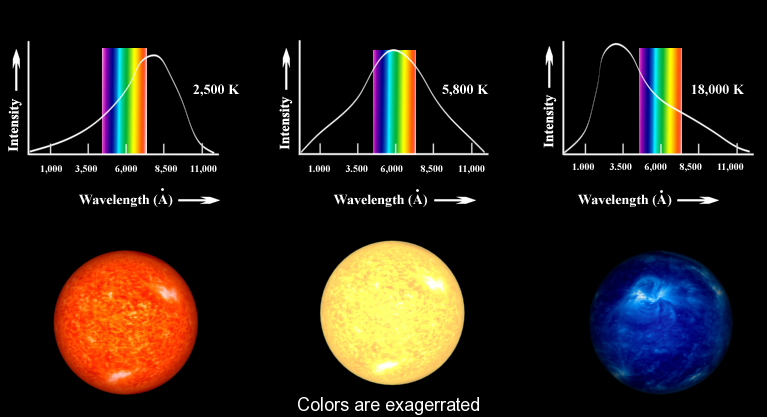
Now you may think all stars look white but when you take a closer look you see that some are Blue, Red and yellow. These colours are an indication of the surface temperature, just think of an iron bar heating up.First it glows red, then yellow then white hot.
White hot stars emit at Blue and ultra violet wave lengths so they appear Blue.
As the stars are so far way it doesn't matter whether you look through a powerful telescope or through a wide angle lens. They just appear as dots.
Don't forget the earth is moving so the stars need to be photographed within a few seconds, unless you want star trails ( I will cover the techniques in the next blog)
Our Milky Way is made up of 200 billion stars and is visible to the naked eye as a pale band across the sky.
The brightness of a star depends on their true lumimosities and also distance from earth. A stars brightness is termed its apparent magnitude, or its true brightness or absolute magnitude is defined as its magnitude at a distance of 32.6 light years away.
This may not mean alot to you but like all things I photograph i always like to know some information about the subject. One of the most important things about photographing the night sky is where on earth do you look?, well i mean where to look in the sky.You will need to start with a star chart and these are available on the internet, once you have these monthly charts its time to get outside and starting looking up.
You will need to know which direction you are looking at then using your star chart you can plot you way around. When outside you would be best to use a red light as your eyes need to become accustom to the dark skies to have the maximum benefit. Start with the plough its one that most people know, you then can pick up Pole star and star hop to other interesting bits of the sky.
Saturday, 16 November 2013
Going, Going Gone
After waiting for over a month to get out, we finally had a clear night on the 4 November. It was very cold but sunny all day so I hoped that it would be a good night. I met up with a friend Chris at 6 pm and headed straight into Derbyshire, its never going to be as good as Shetland for unpolluted skies but we have to make the most of it. With Sheffield at one side and Manchester at the other there is always going to be an orange glow.
Pleiades- Hot Blue stars found in Taurus
Setting up quickly in the dark we first found a reasonable foreground which helps composition and started to set the timer for a long exposure. I already knew that the moon wouldn't be a problem as it was new, so no extra light pollution from the source. But after about 15 mins we could see the cloud building over the Pennines and with a strong wind the cloud was over us and obscured the stars. The following night was similar in every way, even though the weather forecast again said it would be clear skies.
This week it again promised clear skies on both the MET and BBC weather forecasts, so this time I thought I would give the Chesterfield area a try, but on arrival a blanket of cloud hid the stars and even the moon for large periods, which was nearly a full moon. Not the best time to be out photographing but I needed to get out. By 10 pm the clouds had departed and clear skies at last appeared but trying to find a sheltered spot away from traffic was difficult around Chesterfield so i headed back to Coal Aston on the outskirts of Sheffield.
With the moon acting as a search light it made all the stars very subdued and even the plough was difficult to make out. So I gave up and will wait for another clear night. Only 6 clear nights (according to weather forecasts) have been evident in 7 weeks so far.
Cloudy moon skies
I will look for other dark sites, it is a big problem even going out into Derbyshire which is one of my favorite destinations as the glow is evident on all the photos.I intend to go out East next time and will look on Google maps for a location
The problem in Shetland is more to do with the wind than the light pollution, with vast areas that are not near cities, in fact any away from Lerwick, Scalloway, Voe, Sandwick would be ideal and these have low populations so less light pollution.
Setting up quickly in the dark we first found a reasonable foreground which helps composition and started to set the timer for a long exposure. I already knew that the moon wouldn't be a problem as it was new, so no extra light pollution from the source. But after about 15 mins we could see the cloud building over the Pennines and with a strong wind the cloud was over us and obscured the stars. The following night was similar in every way, even though the weather forecast again said it would be clear skies.
This week it again promised clear skies on both the MET and BBC weather forecasts, so this time I thought I would give the Chesterfield area a try, but on arrival a blanket of cloud hid the stars and even the moon for large periods, which was nearly a full moon. Not the best time to be out photographing but I needed to get out. By 10 pm the clouds had departed and clear skies at last appeared but trying to find a sheltered spot away from traffic was difficult around Chesterfield so i headed back to Coal Aston on the outskirts of Sheffield.
With the moon acting as a search light it made all the stars very subdued and even the plough was difficult to make out. So I gave up and will wait for another clear night. Only 6 clear nights (according to weather forecasts) have been evident in 7 weeks so far.
Cloudy moon skies
I will look for other dark sites, it is a big problem even going out into Derbyshire which is one of my favorite destinations as the glow is evident on all the photos.I intend to go out East next time and will look on Google maps for a location
The problem in Shetland is more to do with the wind than the light pollution, with vast areas that are not near cities, in fact any away from Lerwick, Scalloway, Voe, Sandwick would be ideal and these have low populations so less light pollution.
Subscribe to:
Posts (Atom)