Tuesday, 8 March 2016

Opportunity missed

What can you do when you have guests and you find out that a massive 6.7 kp aurora is taking place outside.


Well not alot until they leave, but peaking outside you could see some activity behind the clouds.


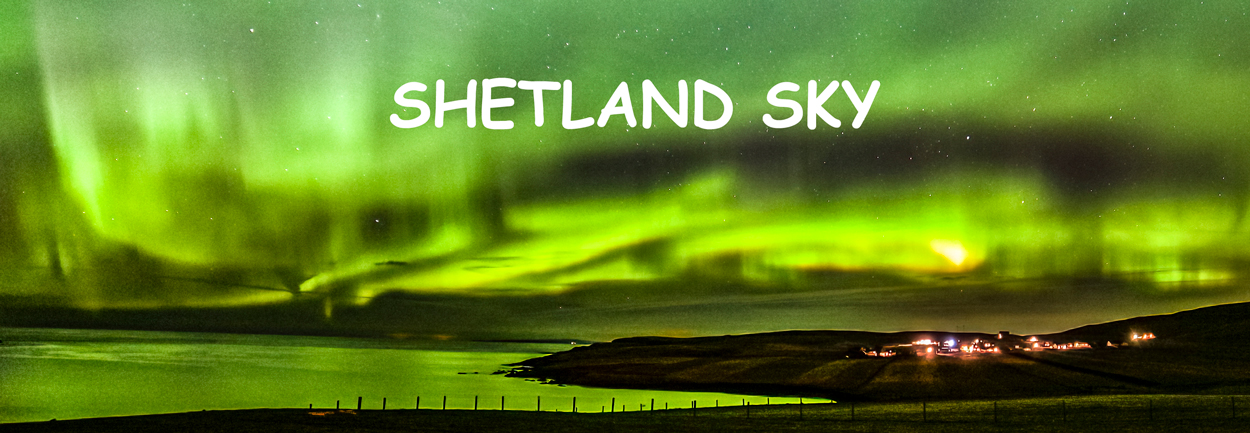
This is the first time I have seen the aurora over a light polluted area. It was so bright green but i missed the colours which had taken place earlier that evening. Not the best aurora I have photographed but never the less still spectacular


 I couldn't really jump in the car and head out but I did go to the bottom of the road and looked out west

 Cloud was coming over and eventually the aurora was lost behind the grey mass. Further south in Scotland a great display took place, many colours visible. Many nights we miss out when a massive aurora takes place as we have cloud cover


The best time and the biggest auroras for us in the UK, tend to take place either in March or September when the earth is turned towards the sun


The following night I was out and only found a weak aurora , just a thin green band across the northern sky, still great to see

Sunday, 14 February 2016

Star trails


The lack of posts have been down to the weather, we have had a lot of gales and the other week Storm Gertrude hit with 120 mph winds. In addition to that it has been very cold, most of the time hovering around freezing both day and night, so night driving has been an issue with icy roads.

Any way I did  get out to do a bit of star trail photography down the road in Sandwick next to the beach. It was dark with no moon so I set the wide angle lens up on the Nikon D7000 and left it running at 30 second intervals for an hour at ISO 800 looking out over a couple of boats.

                                                                                Sumburgh with Iridium Flares

After I also took 15 dark frames to reduce the noise. Its no good using noise reduction in the camera as the camera would be unusable for another 30 seconds after the photo was taken so would produce large gaps in the star trail. Ideally it should be at the same temperature so a dark frame subtraction would  be better to use but I have found it better to take dark frames after the session.

                                                                                                  Sandsayre Normal mode

The last couple of days have produced weak auroras but these have been in the very early hours  when I have been asleep. I have been out in the day and now have found a couple of locations I would like to take either star trails or aurora photos, its always nice to have something in the foreground.

                                                                                                       Comet Mode

Focus issues still confuse people, even after explaining it a few times. Something I will be covering again in the next intermediate photography course next month which is now fully booked.

I finally after a lot of saving and debating, purchased a Nikon D610 (full frame) and a Samyang 14 mm lens. These have both been highly recommended for astrophotography, although in some cases the lens produces some very soft corners so I will be testing this out very soon.

                                                                                                     Aurora down at Sandsayre

Saturday, 19 December 2015

What a night

It seemed quiet fitting that having just delivered an astrophotography training session to my intermediate photography group in Lerwick , the conditions for astrophotography that night was just perfect.

After a few very cold night with lots of ice about, Monday finally warmed up and it promised a reasonably clear night/ Monday was of course the night for the Geminid Meteor shower so I kept locally and headed down to the coast a short distance away with good all round views.


At 7.00 pm I pulled up and instantly saw the aurora, it was too much of a temptation so I brought out two cameras and mounted them on  tripods. The 18-200mm lens pointing out to the aurora which continued to develop, the second with a 11-16 mm lens pointing towards the sky.


For the second time in a couple of nights it started to rain, but this was brief thankfully, the clouds clearing. The brightness of the aurora began to change and curtains of green waved across the sky , shafts of green reaching high into the sky and also below.


As usual the lights from Cunningsburgh caused light pollution and made the clouds orange but I think this added to the photos. This aurora was the second best I have seen this year, but this one had little other colour than green visible. This wasn't the case further north and west where purple banding and shafts of light could be seen in Unst and Walls


The Aurora can last several hours or a few minutes, this one was visible throughout the three hours I was out. At nearly 10 pm it started to fade, but others saw it well past midnight. I could have well missed the whole events had it not been for the meteor shower which I intended to photograph.

Using multi shooting at 25 seconds I captured many frames but only two with meteor trails, I did however see dozens, some very bright. Most tended to be short in length, but a couple very long trails came through very bright.


Its difficult capturing meteors even with a wide angle lens, even pointing to the source did not really help and looking at what happened last night I will in future point the lens away from the centre. At over 100 per hour the Geminid Meteor shower is the best chance to capture one or more of these beauties.

Normally I am down at this spot by myself but on this occasion several other people including photographer took the opportunity of a still moonless night to see the spectacle. It was good to get out at last but the forecast for the next 10 days looks poor with gales and rain returning so this may be the last chance to get out for some night photography


It was good to see a few of the photography group managed to get some Aurora photos of their own. If you want to come on an Adult learning course either beginners - know your own camera or intermediate course ( 3 different 6 week courses) covering a wide range of photography, then contact Shetland Adult Education in Lerwick . Note the January 2016 Intermediate course is full, only a few left on the Intermediate course commencing end of February. A new beginners course starts in April


Tuesday, 17 November 2015

Milky Way over St Ninian's Isle

Its been a very frustrating time missing out on auroras and various conjunctions due to a combination of things, mainly the weather.


I am sure many of you will have the same problems, everything looks good, no moon and cloudless skies, but then - Its gale force winds, the cloud moves in (is any weather forecast correct in Shetland?) and no aurora appears even though it has just forecast a KP7


Astrophotography certainly tests your patience, especially when you see other people posting great photos from cloudless, wind free sites. At least we can dream  a little and when everything does come together it makes for a truly memorable night.


The other night it started foggy in Sandwick but with a high aurora predicted we decided to go to the west side on our way to an event. Just as hoped for the sky was clear and it was fairly calm. My new Gitzo tripod is a big help, it weighs a ton, very handy to stop any movement.


No Aurora activity on arrival, but it can flare up anytime, so we waited and in the meantime the Milky Way looked absolutely stunning. Although its not a true dark site its one of the best sites to visit if you only have a short time period.


I never get tired looking at the Milky way , the cloudy band of millions of stars, perhaps around 400 million  and a 100 million planets arch across the sky from east to west. The width is approx 150 million light years in diameter. It has a low surface brightness and needs a dark sky to see the best.


I set the camera up, the Nikon D7000 and the Tokina 11-16mm lens at 11mm and started to shot at 25 seconds to avoid star trailing. Instead of the normal ISO 1600 I took it up to ISO 4000 to bring out the star fields which it did. The one draw back is the noise, you wont want a lot of noise reduction as it kills the stars, so its a balancing game.


Its all down to processing and personal preference on how much you want to bring out the Milky way. I don't use Photoshop preferring Lightroom.

Well the aurora never appeared that night as it was delayed, making an appearance the following night, unfortunately for us in Shetland it was thick cloud with fog, so its back to a waiting game.

Would have been due to go out Thursday & Friday night with another high aurora predicted but having seen the forecast and confirmed by me stepping outside for a few minutes, i think it may have been too windy with a Force 10 hitting Shetland, this one called Abegail -or A BIG GALE
Wednesday, 14 October 2015

At Last

Finally a few clear night, which didn't coincide with other events. The first was out west following an excellent night at the accordion & fiddle festival at Skeld. The sky was full of stars and the aurora prediction was for KP5, so on the way back around midnight we stopped off at Park Hall, a venue i wanted to get to for while.


The building is now abandoned, but has all the right ingredients. It is set in ts own grounds, looks good in silhouette facing north with no light pollution. Although it was a bit breezy i set up the Nikon D7000 with the Tokina at 11mm with a faint trace of the aurora.


I picked this particular night as I needed the car headlight to hit the building and with a steady stream of cars heading back from the festival it provided a good opportunity as normally the road is very quiet normally.

While the stars looked good the aurora failed to get brighter, later i found out the it was the best around 8 pm. I also lit the building with a powerful LED which shows just how blue the light is compared to a better looking light, via the headlights.
The milky way looked good as well with little light pollution the stars really stood out

Then earlier this week another alert of KP5 with the forecast of a mainly clear night. i headed over to Bigton and set up at the top of the hill overlooking St Ninians tombolo. It was completely still, very unusual in Shetland but the cloud was the main problem, the forecast completely wrong again. The aurora hidden by the cloud.


This was a good time for astrophotography as the moon was new so no light pollution.


After this I headed up Scousburgh Hill with great views north, it was just a shame about the cloud, but it did have some breaks. Again this is normally a windy place but not on this night . I did include the giant bucket left after construction of some buildings which provided some foreground interest.


Wednesday, 30 September 2015

Sun Spots

With the long summer !! nights here in Shetland there has not been much chance for night photography.

So its all down to photographing the sun- Please use a special solar filter


Sunspots with a solar filter can be photographed  when its sunny of course. Setting up on a tripod, a 500 mm lens and using a cable release is all that is needed. Don't look through the viewfinder it is very dangerous but instead use live-view which is safe. If you did view the sun with your naked eye you will feel no pain because your retina has no nerve endings, you will become blinded almost instantly. Even after a short while the lens end temperature will reach 500 degrees, so as soon as you have finished photographing move the camera away from the sun


After focusing in live view you can fire away, the sun is always a superb target. With  a 500 mm zoom lens its best to go down to a 150 mm , find the sun then zoom in, the sun doesn't stay in view long but it can be easy to find. The solar filter cuts the light down so I use ISO 400 and shoot around f/8.

Sunspots add interest, these are small dark markings in the sun's photo sphere, large storms not of rain and wind but of intense magnetic activity. Because they are magnetic they always appear in pairs with opposite magnetic polarity.

The dark spots are in fact cool areas in a very hot mass. These move left to right across the suns surface (northern hemisphere) , normally lasting no more than 14 days. Some don't make it across the whole surface.

Every 11 years sunspots reach a peak and within a year 100's can be seen. But every 5.5 years after the peak very few or none will be visible. The peak activity for sunspots also occurs with other activity, which include mass ejections, called corona.

Some people also have concluded that in periods of little activity, very cold weather occurs on earth. Like wise in years of very active sunspots the sun temperature will rise could this be Global warming ??. The last peak activity was back in 2011, so you would expect less sunspots from mid 2017 on.

The other good thing is in periods of high activity there is a greater chance to see the Aurora (Northern Lights) .


Auroras can be superb colours but when they are around KP3-4 they look dark on the horizon and sometimes you have to use your camera to tell they are actually showing as the eye cannot detect low activity.